Neferneferuaten:
Glorious is the Splendour
of the Sun
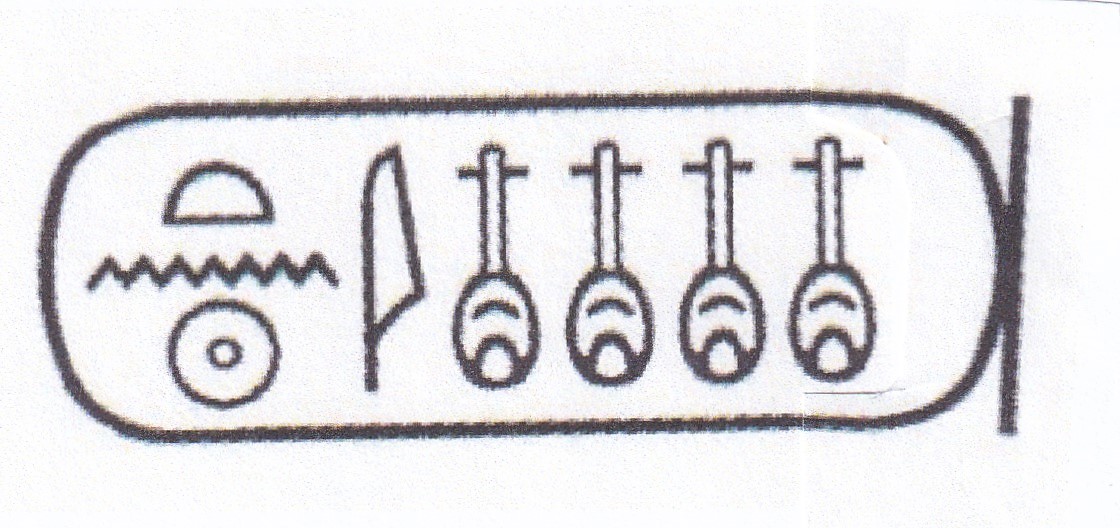 By Robin Gordon
 Auksford 2024
©
Copyright
Robin Gordon, 2024
PART IV:
ANKHKHEPERURE
18. Handover of power
Auksford 2024
©
Copyright
Robin Gordon, 2024
PART IV:
ANKHKHEPERURE
18. Handover of power
It happened that the Commander in Chief of the armed forces
of
the Two Lands died. The post was vacant and needed to be
filled. It was one which Ay might have coveted, but he felt
that
he needed to stay close to the young King. Even if most of
the
business of government was reported only to that woman, there were
matters on which King Tutankhaten could legitimately claim to have a
say, and in those cases his Fan-Bearer and closest counsellor would be
in at the meetings with the viziers and other officials, and, whenever
he got the chance to talk, Ay knew that he could always get his way.
His long-winded
speeches, with emphasis on words of little or no importance could be
relied on to send at least half of his audience to sleep, then he and
his allies could slip in their resolution and have it passed before his
opponents realised what had happened. As Fan-Bearer, with
constant access to the young King, he could make sure that, if anything
came up that he thought could be turned to his advantage, his young
protégé could be persuaded that he needed to
intervene. He was, after all, still only a little boy who
could
be made to obey his grown-up advisers.
So, though Ay
considered himself the most senior army officer in the Two lands
– he had, after all, been Commander of the King’s
Cavalry
since the reign of King Nebmaatre-Amenhotep – it was not for
himself that he sought the post of Commander in Chief, but for his
crony, Nakhtmin.
“Mmnngh!
Your Majesty, as
Your Majesty’s most faithful and longest-serving
counsellor, it is my
opinion that
Your Majesty should insist on
having
your say in
the appointment of the
new Commander in Chief of
Your
Majesty’s armed forces, for, unless Your Majesty
insists on
being
heard on
this matter I fear that
those of Your Majesty’s
counsellors who have their own
ambitions and
agenda may seek to
appoint
an inferior candidate whose loyalty to Your Majesty may
be less than
his loyalty to
a clique
whose ambitions may run counter to
Your
Majesty’s interests and
welfare.
“May I
therefore inform the Queen, shee-hee-hee-heee,
that Your Majesty
desires to make his opinions known and to be consulted about an
appointment so important to
the welfare of
Your Majesty’s
kingdom?”
Tutankhaten was
by this time heartily sick of the repetitious use of his title as
Majesty. Above all he wanted to stop Ay talking at him.
“Yes,” he said.
“Mmmh,
excellent. I shall inform the Queen and the viziers of Your
Majesty’s wishes. Perhaps we ought to
consider who might be
a candidate. It occurs to me that General Nakhtmin is one of the
most senior officers in Your Majesty’s army, and that perhaps we
ought to consider him as a very suitable man to hold this
important
office. General Nakhtmin has been …”
“I’m hungry,” said the King.
“Go and get me something to eat, Lord Ay!”
“Mmmnghg!
Nnngh-nnngh-nnngh! Yes, Your
Majesty.” He had only
just been able to stop himself telling that boy that this was a grave
and serious insult. He stalked away to find a servant.
“Go and
tell Aunty Nefert,” said the King, and Ankhesenpaaten stole
away
to let Smenkhkare know what Ay was up to. When she came back
Ay
was back with the King.
“General Nakhtmin …” he began.
“For Re’s sake let me eat in peace, Lord Ay,” said the
boy king, now in quite a temper.
Ay
got up, bowed, and strode away.
“Mum says
she won’t have horrid old Nakhtmin at any price,”
said
Ankhesenpaaten. “She says she wants
Horemheb.”
“Then Horemheb gets it,” said Tutankhaten,
“no matter how much Ay nags at me.”
Ay did
nag. The young King was totally sick of hearing
him.
“Thank you, Lord Ay,” he said.
“I know now who
is the best man to be commander in chief, and I shall certainly make my
views known.”
“Mmnngh!
Thank you, Your Majesty,” said Ay, and went off to tell
Nakhtmin that the King would support him.
Horemheb was
appointed Commander in Chief, unopposed. Both Smenkhkare and
Tutankhaten spoke firmly in favour of his appointment, and Ay quickly
realised that to oppose both monarchs would not be to his advantage, so
he too spoke in favour of Horemheb and expressed his satisfaction that
so suitable a candidate had been appointed.
That evening he
ranted to Tey and Nakhtmin about the way that woman had
deceived our
beloved prince to appoint her own favourite to the top job.
He
reminded them of the rumours that Queen-Regnant Maatkare-Hatshepsut had
taken her chief minister, Senenmut, as her lover – people had
sniggered and made jokes about it at the time and there were even rude
drawings showing the monarch and her principal minister indulging in
sexual shenanigans.
“I
wonder,” he sniggered, “if we could start similar
rumours
about that woman
and Horemheb. That would certainly set the cat
among the
pigeons,
sheee-heee-heee-heee.”
Soon Ay had
other things to worry about. The new Commander in Chief
called
the foreign mercenaries away from their task of obliterating the name
of Amun from every monument they found, and set them to work, with the
rest of the army, to prepare for military operations among the restless
vassal states along the shore of the Great Green Sea. Morale
in
the army soared. After years of minor police work inside the
Two
Lands, watching helplessly while the influence and status of Kemet
declined, the vassal states quarrelled among themselves, and the power
of the new confederated states of Hatti grew and menaced the
established imperial framework, they realised that they had a commander
who would re-establish the power of Kemet with the backing of the two
monarchs.
Rumourmongers
maligning the new Commander in Chief were not popular among the
soldiers, who rapidly found ways, often painful, of persuading them to
desist. One, who dared to drop hints in the presence of King
Tutankhaten about possible impropriety involved in the promotion of
Horemheb, sent the young King into a paroxysm of fury and was flogged
within an inch of his life.
Ay decided not to proceed with that policy.
Things were
going from bad to worse. The Queen-Regnant had taken her
eldest
daughter, Meretaten, as her Queen-Consort, and the young King decided
that he too must have a consort, and chose his favourite half-sister,
Ankhesenpaaten. To mark the celebration of their marriage the
pair changed their names to Tutankhamun and Ankhesenamun.
This
together with the withdrawal of the vandals from the temples and the
announcement by Smenkhkare that her tomb was to be in the Valley of the
Kings near Waset, reconciled the priests of Amun to the new regime and
robbed Ay of one of the principal ways he had furthered his own
interest by misrepresenting the two opposing sides to each other.
His hatred of
Nefertiti blazed and burned within him. The universal order
governing the world was destroyed. A woman and a crippled boy
ruled where he should have. When Prince Djehutymose died of
the
plague King Nebmaatre ought never to have passed the succession to that
mad second son of his. Natural order and justice demanded
that he
should have chosen a capable heir, a man who had experience of
government and was closely allied to the royal family. He
should
have made Ay his heir.
What had
prevented that? Who had overturned the rightful progression
of
universal justice? Those women,
Queen Tiye and that
woman!
They were the ones who had deprived him of his just and rightful place
on the throne of the Two Lands.
He had done his
best to curb the madness of King Honky, tried over and over again to
calm his rage against the ancient gods, as he had explained to the
First Prophet of Amun, yet he had been thwarted again and
again.
It was that woman,
that foreign
woman, who had overthrown maat,
the
natural order, symbolised and governed by the goddess Maat, daughter of
Re, for she was completely without any respect for the gods of Kemet,
preferring, no doubt, the pagan gods of her own savage
country.
In fact, if the truth were known, she had probably organised the whole
Akhetaten affair to undermine the Two Lands and subject them to her
father, Tushratta, the King of Mitanni. Well, the gods were
not
going to stand for that. Suppiluliuma of Hatti was now that
overlord of the north, Tushratta was dead, and his treacherous son or
brother now ruled as a puppet king, controlled by
Suppiluliuma.
That woman could
not hand over Kemet to Mitanni, and, eventually, the
gods would re-establish the right universal order in Kemet and give the
Two Lands a proper King who would maintain maat.
Little
Tutankhamun? Ay didn’t think he would last
long.
Already he was using his staff of office as a walking stick to relieve
the pain in his increasingly crippled foot. When that woman was
dead and buried, all Ay would have to do was to persuade little King
Limp-along to make him his deputy and heir presumptive and then wait
for the little beast to succumb to his infirmities. Then
Kemet
would be ruled by Ay, the Doer of Right, the Upholder of Justice, the
Upholder of Universal Order, the Maintainer of Maat.
At meetings of
the Kings’ Council he could scarcely conceal his hatred of that
woman, so it was not surprising that she said to
Tutankhamun, “I
am probably not going to be here much longer. I think Ay
wants to
kill me. When I am dead, make sure that you perform the
Opening
of the Mouth ritual to confirm yourself as my successor. Do
not
let Ay take over. Then you should make Horemheb your Deputy
with
full powers to act on your behalf throughout the Two Lands. I
feel sure that you are in danger from Ay, but if Horemheb is your
Deputy and heir presumptive, Ay won’t dare attack you because
if
you were to die Horemheb would become King. You can trust
Horemheb. Heir presumptive means that he would be King if you
died without having any children, but you are still young, and when you
do have a
son, your son will become heir apparent.”
Tutankhamun did
not entirely believe Aunty Nefert, but Ankhesenamun reminded him that
their Granny had been sure that Ay was behind the murder of his mother,
Kiya.
Then Aunty
Nefert fell ill. She told the children she was sure she had
been
poisoned by Ay. She grew worse, and then she died.
Had she
been poisoned? No-one knew. If she had, had Ay
arranged it,
or had she just had the misfortune to eat something that had gone
bad? Had she caught some illness? Was it just old
age that
ended her life? She was, after all, over forty-five, and many
people never reached that age, even if others went on much longer.
The traditional
seventy days of mourning were announced. No-one would bathe
or
drink alcohol until the Queen’s body had been purified and
mummified, until her coffins were ready and until she was placed in her
tomb. Tutankhamun and Ankhesenamun and their sisters wept for
the
loss of their mother, for she was a mother to Tutankhamun as well as to
her own daughters. Ay, however, in the privacy of his home,
drank
and feasted and rejoiced, for the death of that woman heralded
the end
of the universal disorder she had brought to the Two Lands and the
first step in his own ascent to the throne.
The tomb of the
Queen-Regnant*1
was not a kingly tomb. It was in the Valley of
the Kings, but it was small, consisting of an entrance room, a downward
stairway, a sloping corridor, another set of stairs, another
downward-sloping corridor, and a burial chamber with a side room for
jars containing the Queen’s digestive organs and some of her
treasures. Maya, the Treasurer, brought together what grave
goods
he could, though constantly thwarted by Ay, who seemed to be running
the funeral arrangements. Ay insisted that Smenkhkare should
be
buried as a Queen, not as a King, for, though she had been the ruler of
Kemet, he said she had only held that position as regent for
Tutankhamun and should therefore not be accorded the symbols of
kingship.
Ay spoke
fluently and at great length, until eventually all the councillors
agreed that Smenkhkare was a queen-regent and not the equivalent of a
king, and that right, order and justice would be served by giving her
that form of funeral suited to a Queen Mother who had ruled on behalf
of her son. Horemheb himself agreed. No-one asked
Tutankhamun.
“Nnngh,
at least she’s not
being buried as a king,”
said Ay to Tey
and Nakhtmin as they feasted at home, “but. if I had had my way,
we would have buried her in
the desert sand
or thrown her body in the
river for
the crocodiles.”
The
funeral was carried out with due respect.
“To show
my love
for my dear
foster-daughter,” sniggered Ay, “I
myself will
perform the ritual opening of
the mouth for her.”
“The King will do that,” said Horemheb, taking up
the adze and handing it to Tutankhamun.
The
little boy performed the ritual solemnly and Neferneferuaten
Nefertiti Ankhkheperure Smenkhkare was placed in her
coffins and sealed into her tomb.
Despite this very minor setback Ay had reason to be pleased,
in
fact when alone with Tey and Nakhtmin he frisked and sniggered like a
nasty little boy who had just pulled off a really horrible trick and
got away with it. Somehow he had taken over the arrangements
for
the late Queen-Regnant’s funeral, and now everyone seemed to
accept that he was in charge of the little King’s household
and
the de-facto,
and indeed de-jure,
manager of the little King’s
councils and government. It was his intention to advise
Tutankhamun that, while he was still a minor and had to devote so much
time to his schooling, he should appoint a trustworthy counsellor as
his deputy, and who better to undertake such a task than his beloved
Uncle Ay?
As deputy to
the King, he would, of course, be heir presumptive, and, should the
King die without issue, as Ay was almost sure he would, then Ay would
at last take his rightful place upon the throne of Kemet.
This
was his secret joy, so secret that he wouldn’t even reveal it
to
Tey, and certainly not to Nakhtmin, who, though devotedly loyal to Ay,
couldn’t be trusted to keep his mouth shut.
Notes
*1 Tomb of the
Queen-Regnant
The tomb described is KV21. It
was discovered
in 1817 by Giovanni Belzoni who found two naked female mummies believed
to be 18th Dynasty queens. He did not identify them and since
his
day both have been severely damaged. Dr Zahi Hawass believes
the
occupants to be Queen Nefertiti and her daughter Ankhesenamun, and DNA
evidence identifies the younger woman as the mother of the two foetuses
found in Tutankhamun’s tomb, and therefore Ankhesenamun.
Back
to text