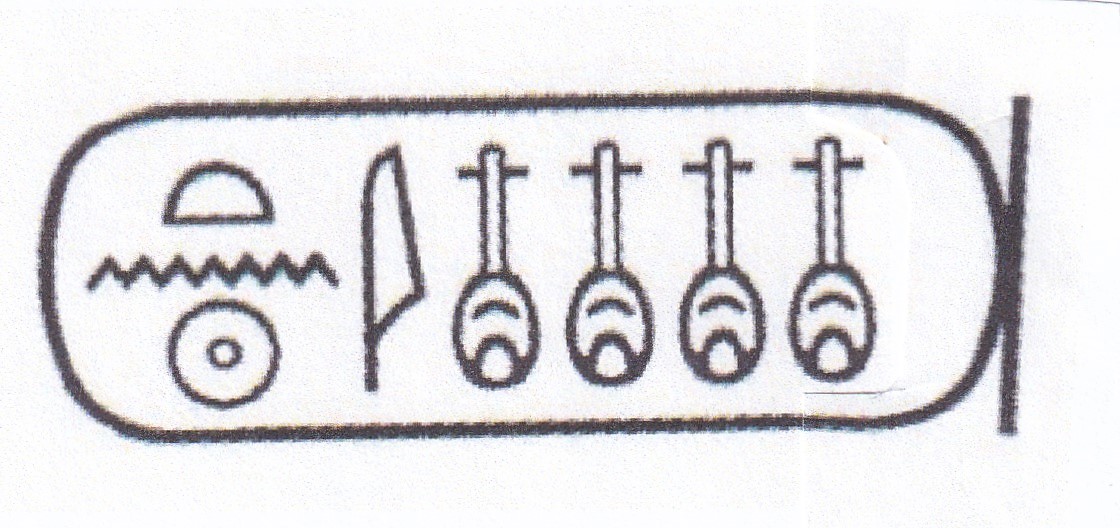
Her grandfather was Shuttarna, Great King of Mitanni,*2
an ally
– more than an ally: a friend – of the great King
Nimmureya*3
who ruled over the land far to the south that he called
sometimes Kemet and sometimes the Two Lands, a country where gold was
said to be as plentiful as the sands of the desert, and where a King
could reign in peace throughout his life, knowing that he would be
succeeded by his son and that he himself would become a god.
For Shuttarna there could be no such peace. While
many of
his nobles heartily approved his alliance, others, an increasingly
powerful party, claimed that the only way for Mitanni to retain its
status as a great power, and even its independence, was to ally itself
to its immediate northern neighbour, Hatti.*4
Hatti, they said, would be the greatest power in the world,
eclipsing the Two Lands, no matter how much gold their King
possessed. Besides, the rulers of Hatti were closely related
to
the rulers of Mitanni. Their language was similar, many words
were almost the same, and they worshipped the same gods. The
King
of their pantheon was the Storm-God, Teshub, Lord of the Tempest and
wielder of the thunderbolt. Teshub looked like a human
warrior,
while the southerners worshipped strange, animal-headed gods or even
animals like baboons, crocodiles or cats.
The southerners were different. Their gods were
different. Their language was different. Even their
skin
was different. Their day was past. Everyone knew
that the
King of Hatti, who had united several previously separate tribes under
his rule, was well on his way to becoming the most powerful King in the
world.
Shuttarna disagreed. He stuck to his friendship
with
Nimmureya, until there came a time when the pro-Hatti faction
revolted. They assassinated Shuttarna and made his eldest
son,
Artashumara, puppet-king in his place.
The young king took the first opportunity he could find to
overthrow and exterminate the controlling faction, but he acted too
hastily. He too was killed, and his younger brother was
installed
as puppet-king.
This boy, Tushratta, acquiesced in all that his masters asked
and
played for many years the part of the obedient puppet-king.
He
had, it seemed, learned that loyal allegiance to the pro-Hatti faction
and alliance with the King of Hatti were the only policies that would
let him survive.
In fact what he had learned was that too hasty action was
dangerous and that any attempt to take back control of his kingdom had
to be carefully prepared and the allegiance of dissatisfied nobles
cautiously secured over many years. When the time came he
struck. The ruling faction was overthrown and its members
executed. Messengers were sent to the Two Lands, where the
Great
King Nimmureya still ruled, seeking a renewal of the old alliance.
As was usual, the alliance, when it was eventually secured
after
three or four years of negotiations, would be sealed by the exchange of
presents and the despatch of a diplomatic bride from Mitanni to
Kemet. It never worked the other way. There was a
rumour
that Kadashman-Enlil, the King of Babylon, had once asked the Great
King Nimmureya for one of his daughters to seal a treaty of friendship,
and been haughtily rebuffed. No daughter of the Good God, for
so
those people called their King, was ever given away to
foreigners. The story goes that Kadashman-Enlil then
suggested
that Nimmureya should send him the daughter of one of his nobles and
just pretend that she was his own. It seems that he got a
very
dusty answer.
Shuttarna had sent his daughter Giluḥepa to Nimmureya, and
Tushratta was anxious to know how his sister had fared in the southern
land before he would agree to send his daughter Taduḥepa.
Unfortunately no-one could find Giluḥepa among the thousand or more
women in Nimmureya’s household. They said she was
probably
happy, probably using a southern name, and probably still surrounded by
the three-hundred and seventeen Mitannian companions and servant girls,
and probably busily engaged in the spinning and weaving business that
the King’s women run from their very comfortable
palace.
That was all very well, but there was no way of knowing if it was true.
That was probably why Tushratta, somewhat boldly, he thought,
perhaps even impudently considering that he was dealing with the
greatest king in the world, instructed his ambassadors to say that he
would only send his daughter to Kemet if she were made Mistress of the
Two Lands. He knew perfectly well, of course, that the Great
King
Nimmureya would never consent to such a thing. His principal
wife, Queen Tiye, had been at his side since he first became King as a
young boy, and his love for her and her devotion to him were well known
throughout the whole world. This was just a preliminary step
in a
process of negotiation that he hoped would make his daughter a junior
queen rather than a mere woman of the royal household.
To his astonishment the ambassadors returned saying that the
Great King Nimmureya had simply agreed to everything they asked,
including the enthronement of Taduḥepa as principal queen, then brought
the meeting to an end and dismissed them.
No, they said, Queen Tiye had not died, nor had she fallen
out of
favour. She had sat at the side of Nimmureya and heard all
that
was said. Judging by her expression, she was not pleased, but
then there was much that seemed not to please Queen Tiye.
Taduḥepa might well then face enmity from the woman she
seemed to
be about to replace as chief queen to the greatest of kings, but even
so, the alliance was increasingly necessary, and even with the enmity
of Queen Tiye, she might well be safer than at home in
Mitanni.
The King of Hatti had not declared all-out war, but his troops had
already made two incursions into Mitannian territory and the pro-Hatti
nobles were again consolidating their power ready for another attempt
to overthrow the king.
Tushratta despatched his ambassadors again to tell the Great
King
Nimmureya that his daughter would set out for Kemet in a
month’s
time with about 300 maidens and serving men, and a rich panoply of
presents for her future husband, including horses and chariots, for
which the Mitannians, like the Hattians were famed.
They stood, lined up in twos in the blazing hot sun of the
southern land, 30 men, then 270 maidens, and, at the back, Taduḥepa and
her bosom companion Puduḥepa with the interpreter from Mitanni who held
an ostrich-feather fan to shield the princess from the fierce heat of
the sun.
The scribes of this southern land seemed to have everything
organised. The princess and her companions were led to the
shelter of a nearby building, and from there she watched as her serving
men and maidens were led into the massive, pillared hall.
When it was her turn to go in, she saw by the flickering
torches
attached to the pillars that her three hundred companions were lying
face down in rows on the floor in adoration of the Great King
Nimmureya. Of the King and of his courtiers there was as yet
no
sign. The scribes led her to the front of the hall and their
interpreter told her to kneel and her two companions to lie face down
on the floor in front of the long dais with its two golden thrones.
“The court will file in, and when the King himself
enters,” an interpreter from Kemet told her, you must grovel
before him.”
“How will I know which is the King?” she
asked.
“You will know,” he replied and moved
away to the side of the room.
A door at the back of the long dais opened and the courtiers
began to file in, taking up their places along the wall. How
could she tell which was the King? All wore white linen
tunics,
and all were marked by various items of jewellery.
Then, by the light of the torches, she saw a figure who
glittered
like the sun. Around his neck were collars of gold. Over his
chest was spread a vast jewelled collar, like a vulture, with its wings
spread up to his shoulders. His arms and hands were covered
in
glistening rings of gold ornamented with lapis lazuli and coloured
glass, and on his head was a gleaming blue crown encrusted with
sparkling sequins of gold and enamel, with at its front the shining
emblems of his kingship, the vulture and the cobra, made of gold with
jewelled eyes that winked in the torchlight.
She bent at once and touched the ground with her forehead,
until
she heard a voice say in that southern tongue, “Arise
Tadukhepa.”
She paused a moment until her own interpreter repeated the
instruction in her own language. She didn’t quite
know why,
but she had told him and her friend Puduḥepa that it would be better if
at first the King and his court did not yet know that she had spent the
last four years diligently studying their language and could understand
quite a lot if people didn’t speak too quickly.
She kept her eyes modestly lowered but was able to see the
King,
seated on his golden throne. At his side sat his queen, the
famous Queen Tiye, the woman she was supposed to replace as Mistress of
the Two Lands. The queen looked sour and discontented, the
corners of her mouth turned down in generalised anger, but anger that
Taduḥepa knew would be directed at her.
On the other side of the King and slightly behind him stood a
tall man, the Fan Bearer with his ostrich-feather fan.
Ranged behind them was a row of high officials and courtiers,
most of them middle-aged or elderly, but her eye was caught by a much
younger man, a boy about her own age, standing among the courtiers and
staring at her with obvious fascination as if he had never seen such a
beautiful girl before. That look spelled danger, that much
she
knew, danger for her and danger for the boy. Kings, even if
they
had no desire to embrace their many wives, would never stand for
concupiscent eyes directing a lustful gaze at a member of their
household collection. She was sure the queen had
noticed.
There was a glitter in her eye that Taduḥepa felt boded ill for her and
the boy. She looked away quickly and tried to concentrate on
the
shining King, understanding now why his courtiers described him as
dazzling like the sun.
The King beckoned her to approach. She came up to
him and
knelt, her interpreter and Puduḥepa in attendance. He put out
a
hand and raised her to her feet, held her in front of him by the arms
and looked her over.
He was short. He was fat. His breath
stank. Was
she to be embraced by this ugly, horrible old man?
He began speaking. She saw that his teeth were
rotten.
Queen Tiye spoke too. Taduḥepa tried to follow, but she
needed
her interpreter to understand properly. The queen was
suggesting
that the girl should be housed with a trusted official to learn the
language and familiarise herself with the culture.
The fan-bearer thrust himself forward and began to speak to
the
King, squirming in self-basement, yet letting the familiarity of his
sibilant tones insinuate a close friendship. She caught some
of
his words and her interpreter translated.
“My dear sister, Queen Tiye, has made a very
valuable
suggestion. My wife and I would be very happy to assist Your Majesty by
offering the hospitality of our humble household to the new princess
until Your Majesty is ready to receive her into your palace.”
The King seemed impatient. Bad temper was clearly
another
of his characteristics. The Queen’s expression was
one of
glaring fury as the King snapped, “Yes.
Yes. Meeting
adjourned,” and turned away.
“Ask him if I can have Puduḥepa to stay with
me,” she ordered the interpreter.
“Your Majesty, he called, “the Princess
Taduḥepa
would like to have her sister Puduḥepa to stay with her.”
Sister?*5
She was sure that was the word he had used.
The fan-bearer began again his quiet sibilant squirming, but
the
queen interrupted. She almost snapped at the King.
Taduḥepa
knew she was urging him to reject the request. The King was
trembling with suppressed rage. The fan-bearer squirmed and
thrust his nose. The queen snapped. The fan-bearer
retreated. Then the King muttered something she
couldn’t
catch, with his hand clutching at his mouth, turned and disappeared
through the door, followed by Queen Tiye and the fan-bearer.
Taduḥepa despaired, but then her interpreter said,
“The
King agrees. Puduḥepa can go with you.”
The King’s fan-bearer seemed a most friendly sort
of
man. He smiled at her and spoke to her in a confiding
tone.
She followed what he was saying in outline, but waited for her
interpreter to translate before she replied. She learned that
his
name was Ay and that he held the post of Fan-Bearer, which, in effect
meant private confidant to the King, privy to all his business and all
his wishes. He was also it seemed Commander of the
King’s
Chariots and priest to one of the gods – Min, was it?
– the
god of Khent-Min, his and the Queen’s home town. He
referred more than once to his dear sister, Queen Tiye,
and told her
how happy he and his wife Tey (or was it Tiye?) would be to have her
staying with them as their guest. She felt relieved that he
had
spoken up so quickly or she might have been consigned to live with one
of the Queen’s agents, and perhaps, after some time had
passed,
she might simply have disappeared.
Through her interpreter she expressed gratitude that she and
Puduḥepa had been given such a hospitable welcome, and expressed her
intention to learn as much as she could about the language and culture
of the Two Lands.
It was when her interpreter was not present that things
changed. Ay spoke to her in his usual tone, sounding as if he
was
her closest friend, but the words he used, thinking she could not
understand, were sneers.
To his wife, Tey, he confided that he expected Queen Tiye
would
find some way of disposing of the girl without offending her father,
not that it mattered much if he did because Tushratta was unlikely to
last long as King and the whole of Mitanni would be swallowed up by
Hatti, but it might be useful to have her under their care.
“I can remind the King of her existence when it suits me,
or perhaps earn the gratitude of the Queen by not reminding
him.
She may even
ask me to arrange a little accident.
Who
knows?
Shee-hee-hee!
In the meantime, we treat her like
an
honoured guest. After all King Fatso is unlikely
to live for
ever, so my
dear sister
won’t have quite as much
influence as she
has now. I think I shall be able to manage the young King
quite
successfully, hee-hee-hee-hee,
and we may then find some use
for the
girl.”
“It’s a pity,” said Tey,
“that we have to have that other girl.”
“Yes,” replied Ay.
“She might have been
even more malleable
without her sister
to turn to, but I
don’t
think we need worry.
Tiye will
send her tutors for language and
culture, but it’s up to us
to make sure she acquires the right
attitude to our politics.”
In a few days Ay managed to send Taduḥepa’s own
interpreter
away and replace him with one of his own servants.
At dinner he indicated the beef and spoke to her in his usual
friendly and confiding tones. His interpreter translated his
words as “Do have some more of this delicious beef, my dear
princess, it will be so good for you,” but she knew that what
he
had actually said was “Do
have some more of this delicious beef,
and I hope
it poisons
you, you nasty
foreign brat.”
She had been well taught back at home, and now, hearing
nothing
but the southerners’ language all day, except when she was
speaking with Puduḥepa, her linguistic skill had come on
amazingly. At first she hadn’t quite known why she
had
concealed her knowledge of their language, just a vague feeling that it
might be useful. This was quickly followed by a desire to
prolong
the time of her tuition to avoid as long as possible having to submit
to the embrace of the obese, foul-breathed King. Now she was
quite determined that Ay and Tey should never know that she could
understand them as they unwittingly revealed themselves.
It fell to Tey to convince her of Ay’s importance,
to
explain that he was the King’s right-hand man, not only privy
to
all his most secret negotiations but able to guide his policy, that it
was he who had replaced in the administration of the Kingdom the
King’s former chief minister, Amenhotep son of Hapu, now
deceased
and become a demigod, and that, if everyone had their due, Ay ought to
be made co-ruler with the King and indeed his heir.
Tadhuhepa didn’t believe a word of it.
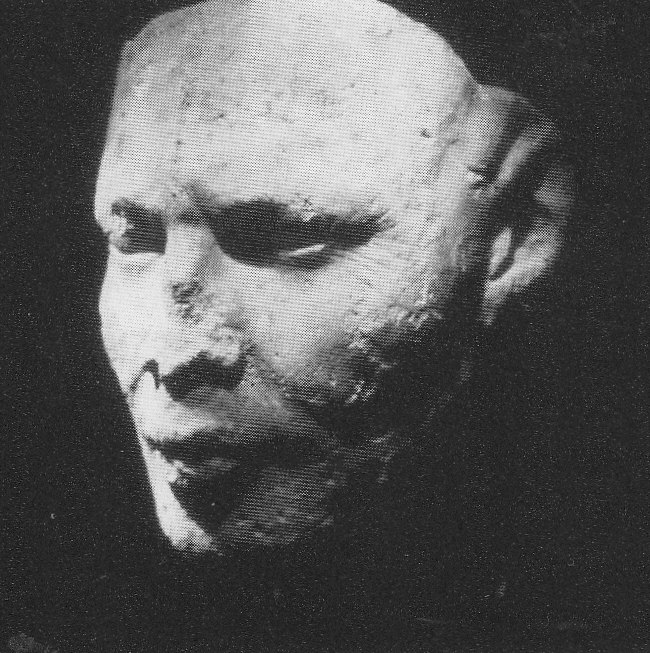
Ay
Notes
*1 Taduḥepa
The variant spellings Taduḥepa and Tadukhepa (and also
Puduḥepa
and Pudukhepa) indicate the different pronunciations used by the
Mitannians and the Egyptians.
Back to text
*2 Mitanni
Mitanni, also called Naharin by the Egyptians, was one of the great
empires whose kings were known as Great Kings and who called each other
brothers. Others were Egypt (the greatest and wealthiest),
Babylon, Assyria and Hatti
The native Mitannians were Hurrians but the country was ruled by an
Indo-European ruling class.
Back to text
*3 Nimmureya
Nimmureya is the Akkadian version of Nebmaatre.
Babylonian-Akkadian was the diplomatic language of the time and
international communication used clay tablets inscribed in cuneiform.
Back to text
*4 Hatti
The original Hattians spoke a language that was neither Semitic nor
Indo-European, but by the time of Egypt’s 18th Dynasty Hatti
was
ruled by an Indo-European elite, usually referred to as Hittites,
though there is no evidence that they are the same as the people called
Hittites in the Bible. The ruling classes in both Mitanni and
Hatti were Indo-Europeans while the greater part of the population were
Hurrians or Hattians.
Back to text
*5 Sister
Egyptians conventionally called close friends brother and
sister.
Even courting couples would call each other brother and sister, though
incest was not practiced in Egypt except by the royal family who
regarded themselves as gods and therefore able to follow the incestuous
habits of the first gods. Reserving the King’s
sisters as
part of his harem, whether he had sexual relations with them or not,
avoided the possibility of other nobles raising claims on the throne,
and may well have been the reason why the Pharaohs, while claiming
daughters of other Great Kings as diplomatic brides, never gave their
own.
Back to text