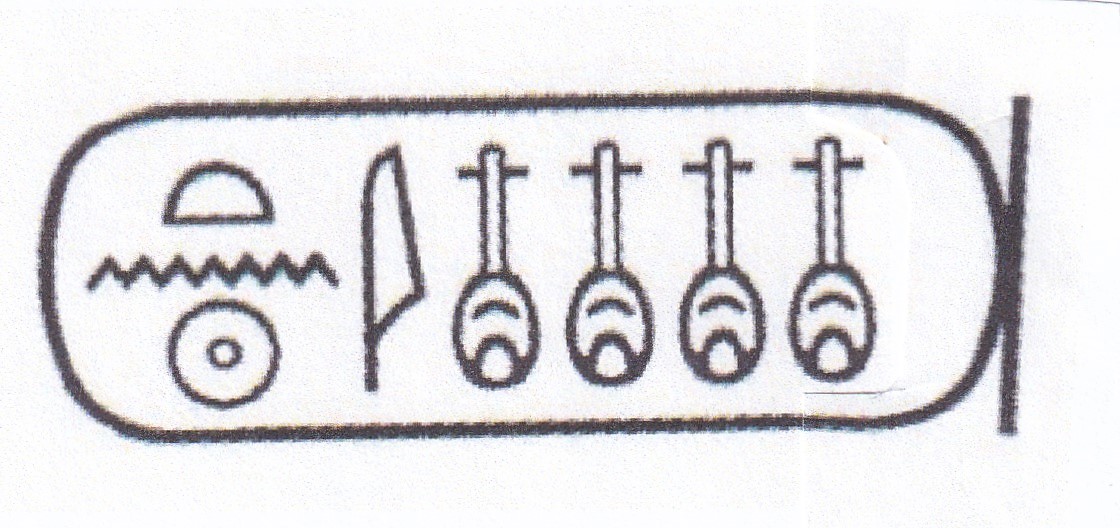
Neferneferuaten:
Glorious is the Splendour
of the Sun
 By Robin Gordon
 Auksford 2024
©
Copyright
Robin Gordon, 2024
PART V:
NEBKHEPERURE
21.
Killing the King
Auksford 2024
©
Copyright
Robin Gordon, 2024
PART V:
NEBKHEPERURE
21.
Killing the King
The King and his companions sailed downstream towards the
administrative capital, Men-Nefer, the eternally beautiful city, also
known as White Walls. General Nakhtmin accompanied the King.
“I have sent General Nakhtmin, a man I
know I can trust, to
look after
the King,” Ay told viziers, ministers, councillors,
priests, anyone of importance. “I have this
dreadful
feeling that
some misfortune may occur and that we may never see our
beloved
King alive again.”
The message he propagated here, there and everywhere, was
that
Horemheb, the Commander in Chief, King’s Deputy, and
Hereditary
Prince, had taken Tutankhamun into battle with the intention of having
him killed before he could father a son, so that Horemheb could usurp
the throne as heir presumptive, and make himself God-King of the Two
Lands despite his humble origins.
Without Ay ever having obviously to say so, he managed to
remind
people that, during the King’s absence, he too held the
position
of King’s Deputy and was thereby also an heir presumptive, so
that if Horemheb did bring about the King’s death, Ay himself
would be an alternative candidate who might prevent the accession to
the throne of the King’s murderer. How fortunate
that the
King had had that sudden and unexpected notion of making Ay his Deputy.
To his own supporters, and he had many for he was always very
plausible, he indicated, again without ever saying so openly, that,
should he be called upon to assume the crown, which, of course, he said
he hoped would never happen, they might expect their lives to carry on
more or less as they had done when he had held so much authority under
the late King Neferkheperure-Waenre-Akhenaten. Those who had
lived high on the hog from the King’s generosity, as
exercised on
his behalf by Ay, would know the good times again, and those who had
been employed as tax-collectors and cruelly dismissed by Horemheb,
would once more find the King’s taxes flowing through their
hands. The less scrupulous even began to hope that perhaps
some
accident might actually befall the young King.
Near the eastern shore of the Great Green Sea the King
entered
his army’s camp. There he was greeted by General
Horemheb,
who explained that the next day they would carry out a punishment raid
on a tribe of bandits who had been raiding the local vassal
kingdom. This was a bit of a disappointment to the eager
young
King. He had perhaps been hoping to see the chariots of
Horemheb’s army charging against the army of Hatti.
“There will be time for that later,” said
Horemheb. We’ll start with a skirmish against these
bandits, then work up to squashing a rebellious vassal king.
Whether we fight against Hatti is, however, questionable.
Part of
the skill of being a commander is knowing how to discourage an opponent
from actually going to war against you. You build up a
reputation
that makes him hesitate. And you build it up by punishment exercises
like this one.
“The
Apiru*1
are not just little gangs of crooks. They are whole
tribes who roam around in a constant state of warfare with the settled
population. Sometimes they are led by deposed princes trying
to
win themselves new kingdoms. There will be plenty of
excitement
in tomorrow’s battle. So, for the first day, Your
Majesty,
you will watch the action from a nearby hill. General
Nakhtmin
will accompany you and there will be a platoon of soldiers to defend
you if any of the enemy get too near.
“After
that, when you have seen how the battle can be organised, how we change
our tactics to cope with changing situations, then we’ll see,
but, for the moment, Your Majesty must remember that I am Commander in
Chief, and, until Your Majesty decides to take on that office himself,
everyone must obey my orders.”
“Understood,” said the King.
That was how it
was. The King watched from a hill a safe distance away while
Horemheb’s army put the Apiru to flight. The next
day, as
the army of Kemet pursued the bandit-tribe, the King rode with them in
his chariot, always accompanied by General Nakhtmin. Both the
King and his minder obeyed the instructions of the Commander in Chief,
and the week passed without danger to the monarch.
Meanwhile, back in Waset, the King’s Deputy, the
Lord Ay
received the coffins containing the bodies of King
Neferkheperure-Waenre, his beloved sister-wife the Princess Baketaten,
known as Kiya, and his royal mother Queen Tiye, Queen-Consort to King
Nebmaatre, and also a consignment of gold, silver and precious stones
from the grave goods of the late King.
Ay had them unloaded from the ships and transferred to the
funerary temple of King Nebmaatre-Amenhotep. There they were
to
be sorted. Ay’s small tomb could not possible hold
all the
grave goods. At his command the gold and jewels were packed
up to
be sent to the storerooms attached to the royal palace. The
coffins were opened. Any obvious jewellery was added to the
storeroom stock. The bodies of the King and his mother were
removed from their solid gold coffins. The body of Queen Tiye
was
replaced in her gilded wooden coffin and that of King
Neferkheperure-Waenre-Akhenaten in Queen Kiya’s second gilded
wooden coffin. The golden coffins and the King’s
richly
gilded wooden outer coffins were added to the storeroom pile, which
Ay’s servants loaded onto sledges to be hauled to the palace.
The bodies in their coffins were then carried into the Valley
of
the Kings to their new resting place in the tomb of Ay – not
his
new tomb, as Tutankhamun had believed, but to the abandoned tomb with
its fissures bringing in dampness.*2
The King would never know, thought Ay, and besides the new
tomb would soon be needed for a different purpose.
Horemheb’s army pursued the Apiru across the
deserts and
plains, with daily skirmishes, each ending in the flight of the
bandits. The King followed each of these pursuits, fights and
flights. Nakhtmin drove his chariot, but stayed well back, so
the
King was never in danger from the enemy, nor within sight of the rest
of his army.
The boy was impatient.
“Go faster, Nakhtmin! Keep up!
We’re falling behind!”
“Yes, Your Majesty,” snarled Nakhtmin.
He whipped the horses into a gallop. Tutankhamun
hung on
with both hands, whooping with excitement as they sped towards the army.
Suddenly Nakhtmin drew his dagger. He slashed at
the reigns
holding the boy safely in the chariot. Then he slashed at the
boy. The point of the dagger caught his cheek. He
gave a
cry of pain and raised his arms defensively. He staggered,
and
Nakhtmin barged against him. The young King fell from the
chariot. Agonising pain shot through his leg as it broke
under
him.
The chariot sped into the distance leaving the wounded King
alone
on the ground. He struggled painfully to get up. He
got to
his knees, but he could not stand.
He saw the chariot make a wide turn then come back towards
him. Rescue? Or death?
The horse plunged forward straight towards him.
They turned
to avoid him. Nakhtmin cursed and hauled on the
reigns. The
chariot swerved. Tutankhamun felt its wheel crash into him,
felt
immense pain. Then the wheel crushed his ribcage, and he died.
Nakhtmin had his story ready. They had been
following the
army, watching the rout of the Apiru, when suddenly two enemy chariots
had appeared out of nowhere – somehow they must have known
the
King was there. They attacked, slashing at the chariot and
its
occupants – Nakhtmin had prepared the evidence: the chariot
had
slashes and sword marks on it, and the horses were both wounded.
He had whipped up the horses to try to escape the attackers,
but
they managed to slash the King’s security reigns and pull him
out
of the chariot. He had wheeled his chariot round to rescue
his
beloved King, but saw, to his horror, one of the enemy chariots
deliberately run over the boy and crush him to death. The
Apiru
then fled, leaving him to weep over the body of Tutankhamun, load it
into the chariot and lead his horses home.
“I have failed in my duty,” he said to
Horemheb. “I don’t know what Lord Ay will
say to me,
but I must return to face whatever penalties he decides to give
me. I pray you, Sir, let me accompany the body of my King on
its
homeward journey.”
“You shall do that,” said Horemheb,
“but I
doubt if Ay will punish you. You have done your best, as a
loyal
soldier should. The Apiru are cunning fighters. I
should
have realised they would try something like this. Tell Ay
that I
shall pursue them and take such a revenge that they will never
forget.”
The body of Tutankhamun was given a rapid
field-purification. His organs were removed and preserved in
jars
of salt. Salt was packed into his body to preserve it for the
journey. His brain was removed and discarded. His
heart,
which should have been carefully preserved and replaced inside his
chest, was crushed and unrecognisable.
“All the better,” thought Nakhtmin, for
it was the
heart that would bear witness before the gods at the judgment of the
dead, and if the King had no heart he probably would not be able to say
how he had died.
While this was happening, a messenger was sent to Ay to bring
him
the news of his King’s death, and then Nakhtmin set out with
his
sad cortège.
When Ay received the message he went into his private
chamber,
found Tey, and frisked and sniggered in the highest of humours.
“Mmnnngh!
The little King is dead,
shee-hee-hee. We’re on our way, my
precious.”
He then summoned the whole court to meet in council and
appeared
before them, accompanied by the Kites of Nebet-Het, and with a slice of
onion concealed in his hand. With tears streaming from his
reddened eyes he announced the sad news that the King was dead and
proclaimed that mourning for the beloved boy would start
immediately. The Kites then began to wail, and the assembly
broke
up.
Over the next few days Ay was busy, meeting viziers,
ministers,
priests, councillors and courtiers here, there and everywhere,
expressing his sorrow and distress at the news, reminding everyone that
he had been against the King going into danger but had had to give way
to Horemheb who had bewitched the boy with tales of his exploits on the
battlefield. By doubting that Horemheb had deliberately
arranged
the King’s death he managed to sow suspicion among the more
gullible of his hearers that that was precisely what Horemheb had done,
and, as he knew it would, this suspicion gradually spread through
rumour and gossip until the whole court was aware of it, even those who
would never believe it. There were, of course, no military
officers present. They would have had plenty to say about the
falsity of such accusations, but they were out on campaign with their
Commander in Chief.
Ay, as Deputy to the King and therefore the person in overall
charge, gave orders for preparations for the King’s
funeral. Maya, the Overseer of the Treasuries and Chief of
Works
in the Necropolis, took charge of the collection of grave goods and the
completion of Tutankhamun’s funerary temple, and Ay was quite
content to let him proceed. Though he thought it unfortunate
that
so much gold, silver, jewellery and other precious items should be
buried with Tutankhamun, yet it was necessary to put on a good show of
desolate grief at the loss of so beloved a ruler. He himself
took
command of the funerary priests and made it clear to them that as much
haste as possible was to be made in the preparation of the body when it
arrived.
Maya ordered a
splendid funerary mask made of solid gold and ornamented with lapis
lazuli from the distant eastern land of Bactria,*3
and with coloured
glass, the rare and precious product of recent technological
advances. He ordered a solid gold coffin with the
King’s
image, a quartzite sarcophagus, onto which the stonemasons would carve
the traditional tutelary goddesses, Iset, Nebet-Het, Neith and Selket,
and also two richly gilded wooden coffins. Ay countermanded
this
last order. Speed was necessary, so he ordered the workers to
substitute for one of the new coffins one of those he had found in
Akhenaten’s tomb at Akhetaten. After all, he
reasoned,
father and son looked quite alike apart from the difference in their
ages.
When the
King’s funeral cortège arrived at Waset Ay ordered
the
priests to begin the preparation of the royal body for burial.
“His
Majesty has already been eviscerated and preserved in
salt for two
weeks,” he told them. “He
must be ready for interment
in
fifty-five days from
now.”
“My Lord,” said the leader of the priests,
“preparation of the body takes seventy days.”
“Is this
the kind of loyalty
I can expect?” raged Ay. “There
are reasons of which
you know nothing.
Have everything done in
fifty-five days and
you will be richly rewarded. If you fail
…”
“We’ll do our best, My Lord.”
“Excellent.”
The following
day Ay sent a carefully dated message to Horemheb, to say that the
King’s body had just arrived and that preparation was about
to
start. He urged Horemheb to spare no effort to avenge the
King in
the seventy days that remained before the funeral and proclamation of
the next sovereign. After that he called together the whole
assembly of ministers and courtiers to hear Nakhtmin’s
account of
the King’s death.
Some of
Ay’s loyal followers, planted here and there in the audience
were
ready with their questions. How did the Apiru know that the
King
was there in the chariot. Nakhtmin did not know but supposed
they
must have had spies watching.
Spies
wouldn’t have recognised the King. They must have
been told
he was there by someone from the army. Was Nakhtmin sure they
hadn’t been sent by Horemheb, who, after all was the
King’s
heir presumptive, the man who had most to gain by his death?
Ay cut in at this point to say that no man of Kemet would ever raise
his hand against the King.
Well then, came the next interruption, Horemheb must have employed
foreigners.
“Surely,”
said Ay, “we can’t really suspect the Lord
Horemheb, our
own
Commander in Chief, of
such a crime.”
“You are
too trusting, My Lord,” called one of Ay’s
agents.
“Horemheb is the one who gains most from the King’s
death. It was Horemheb who insisted on taking the boy into
battle
and subjecting him to danger.”
“I can’t
believe it,” said Ay in a lachrymose tome that suggested he
possibly could.
His agents were
now in full cry. Horemheb had murdered the King.
Horemheb
was a traitor. Horemheb was a usurper. Horemheb
could not
possibly be allowed to take the throne.
“Lord Ay,
you are also King’s Deputy,” cried one of the loyal
agents. “That means you have as much claim to be
the
King’s heir as Horemheb has.”
“Ay should be King!” shouted another.
“Keep Horemheb out!”
“Crown Ay as King!”
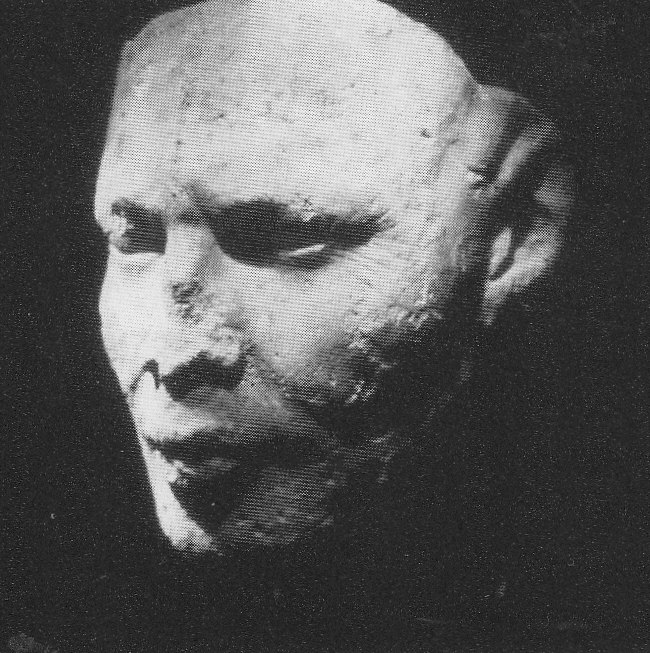
Ay modestly
accepted that, if it were true that Horemheb had murdered the King,
then he would accept the trust put in him by the people of the Two
Lands and allow himself to be crowned.
Ay
Notes
*1 Apiru
Nomads, on the fringe of settled society, outlaws. Some
theories
link the words Apiru and Hebrew, but without any
justification.
The Apiru belonged to several different ethnic groups including East
and West Semitic, Hurrian and Indo-European and spoke a variety of
different languages.
Back to text
*2
Ay’s abandoned tomb
KV55, discovered in 1907 by Edward Ayrton who was working for Theodore
Davis who held the concession for archaeological excavations in the
Valley of the Kings at that time. Only one body
remained.
It seems that during the 20th Dynasty the builders of a nearby tomb
accidentally broke into KV55. Reading the names of the
occupants
they rescued Tiye and Kiya from the corrupting presence of Akhenaten
and defaced the name on his coffin (which had originally been made for
Kiya). Tiye and Kiya were eventually buried in the cache of
royal
mummies in the tomb of Amenhotep II (KV35) when royal mummies were
brought together for safety during the Third Intermediate Period.
Various
suggestions were made for the identification of the remaining
body. At first it was thought to be female, then identified
as a
young man thought to be the mysterious ruler Smenkhkare, then as a
middle-aged man, and now identified by DNA analysis as the son of King
Amenhotep III and the father of Tutankhamun, and therefore as Akhenaten.
Artefacts
belonging to Akhenaten, Tiye and Kiya were found in KV55, including the
remains of Queen Tiye’s shrines, which appear to have been
smashed by Davis’s excavators.
Back to text
*3 Bactria
Afghanistan.
Back to text