Neferneferuaten:
Glorious is the Splendour
of the Sun
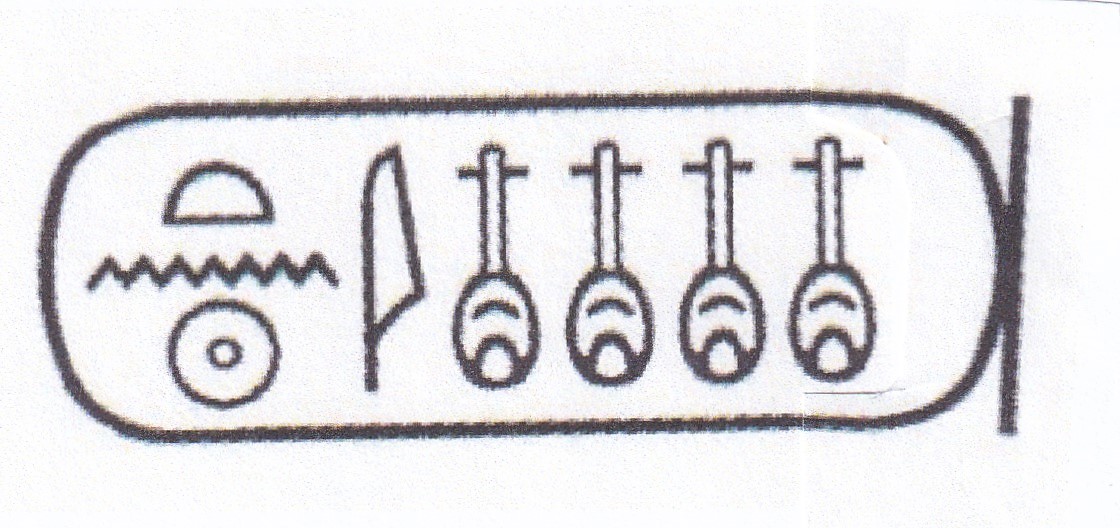 By Robin Gordon
 Auksford 2024
©
Copyright
Robin Gordon, 2024
PART
I:
THE GODS OF KEMET
3. The
Murder of Usír
Auksford 2024
©
Copyright
Robin Gordon, 2024
PART
I:
THE GODS OF KEMET
3. The
Murder of Usír
1.
The casket
When
Re named Usír to be King upon Earth
that
moment in Set’kh did envy gain birth.
He
claimed that Usír had been slaking his lust
upon
Nebet-het, but his claim was unjust,
for
what Set’kh wanted above everything,
was
the crown, and the gods all to hail him as King.
Set’kh
had gathered a gang of supporters.
Where
he led they’d follow, on land, over waters.
Now
he and his men came up with a plan
to
make a great chest in the form of a man.
It
was made out of wood and all covered in gold.
“Who
fits in it best will win it,” they told
all
who would listen, including Usír.
“The
prize I’ll award and spectators will cheer,”
said
the King, but his brother invited him down
to
try it himself – with his eyes on the crown.
With
reluctance Usír then agreed to try out
the
casket. Once in it he heard Set’kh shout:
“We’ve
got him, we’ve got him, we’ve got him at last!
He’s
inside the casket, so nail the lid fast!
Throw
the box in the River to float out to sea.
Usír’s
disappeared, so as King they’ll have me,
for
whether they like it or not I will own
the
crown and the sceptre, the kingship and throne.”
2.
Iset’s search
When
Iset found Usír had gone,
to
find where he might be
she
searched the land from end to end,
and
then she searched the sea.
She
questioned all that she could find
to
solve Usír’s sad fate,
and
so she heard the sorry tale
of
Set’kh’s baleful hate.
By
River’s shore had Set’kh made
a
casket, wood and gold,
deceived
Usír and nailed him in,
an
evil scheme and bold.
So
Set’kh ruled the land as King,
and
many years did pass.
Still
Iset searched, but news of what
had
happened now was sparse.
An
old man told her, as a child
he’d
played upon the shore
and
seen a casket floating by.
He’d
never seen before
a
box so beautifully made,
with
gold and jewels rare.
The
current took it out to sea.
He
could not tell her where.
So
Iset went across the sea
to
follow currents strong,
to
see if she could trace the course
the
casket flowed along.
At
length she came to Gubla town,*1
and
there she felt a stir
that
said Usír is close at hand.
Her
feelings could not err.
Iset
sat down upon the shore
and
summoned up the past.
She
saw the casket come to land,
she
saw where it was cast
by
the waves upon the strand
where
grew a youngish tree,
the
wood of which engulfed at last
its
present from the sea.
The
tree was gone, nought but a stump
now
stood upon the strand.
A
pillar now, it stood within
a
palace close at hand.
Within
that pillar still there lay
the
body of Usír.
Till
she had found a way to win
him
back she would stay near.
3.
Iset finds Usír’s body
To
the palace Iset goes
where
the Queen is in the throes
of
misery: her baby son,
her
only child, her precious one,
has
from his birth been weak and frail,
and
now it seems his health will fail
completely
and that he will die.
Learned
doctors don’t know why.
Her
mouth is taut, her eyes are wild.
She’d
offer all to save her child.
A
servant brings to her the news
an
ancient crone awaits her, whose
appearance
shows she’s from the south,
and
all have heard by word of mouth
that
those from Kemet are deemed wise
in
healing magic. This disguise
had
Iset taken. She appeared
before
the Queen, who so much feared
to
lose her child that she’d accept
any
help, and so she leapt
at
the offer Iset made
to
save her child through magic’s aid.
“Kemet’s
lore, revealed to me
will
save your child, and you will see
him
growing stronger every day,
but
you must let me have my way
and
never seek to peep or pry
to
find the secret spells that I
will
weave around him. If you do”
said
Iset, “then you’ll surely rue
your
interference in my plan.
The
gods do not reveal to man
the
power by which they govern all.
beware,
lest hard upon you fall
the
wrath of heaven. Know your place
and
leave to me sufficient space
to
work my magic on the boy,
and
at the end you’ll have great joy.”
To
speak in this way to a queen
isn’t
usual. It could mean
punishment,
or even death,
but
the Queen just caught her breath
because
the shrivelled, ancient crone
who
stood before her seemed to own
both
majesty and wisdom, and
she
came from that great southern land
famed
for healers. So she said,
“I
agree,” for full of dread
she
was in case the boy might die,
and
so she promised not to pry.
With
Iset’s care it wasn’t long
before
the boy grew hale and strong.
His
sickly cry became a bellow
and
he an active little fellow,
no
longer lying pale and sick
but
sitting up, and then was quick
to
crawl about upon the floor.
It
made his mother’s spirits soar.
The
days went by. The boy grew strong.
It
made his mother rather long
to
know just how it was the crone
had
strengthened both his flesh and bone
and
filled his spirits to the brim
with
moral strength, and made of him
the
image of a future King
of
whom admiring poets sing.
But
she had promised not to pry,
and
so she did her best to try
and
keep the vow that she had made,
but
chance, she thought, might bring her aid,
so
through the night a watch she kept
while
the King, her husband, slept.
One
night it chanced that she observed,
hidden
where the passage curved,
the
ancient crone come from her room
and
scuttle off through dark and gloom.
Anxiously
the Queen did follow
her
to the hall, where, as a swallow,
she
fluttered round the pillar madly
and
twittered lamentations sadly.
This
transformation to the Queen
was
magical. What could it mean?
She
realised that all alone
the
prince was left while thus the crone
performed
her ritual in the hall.
He
must be rescued, lest befall
some
accident. Besides she saw
a
chance to see behind that door,
and
then at last she’d understand.
She
wouldn’t pry. It wasn’t planned.
It
all had happened just by chance.
She’d
only take a hurried glance.
One
hurried glance was all it took.
The
Queen was horrified and shook
from
head to toe for just a second.
A
sight far worse than she had reckoned
met
her sight. Around the child
a
flickering ring of fiery wild
flames
was burning, rising high.
She
would not let her baby die
amidst
the blazing fire, and so
she
dived straight in to overthrow
the
magic of the crone and take
her
son to safety. For his sake
she
risked the fire, she risked the pain
to
bring him safely out again.
Instantly
appeared a figure
like
the crone, but much much bigger,
no
longer shrivelled, bent and old.
but
tall and straight and bright as gold.
Now
Iset took her form divine,
no
minor god, one of the Nine,
the
gods who at creation’s birth
were
the first to walk on Earth.
“You
stupid woman!” Iset said.
The
Queen collapsed, quite full of dread.
She
clutched her babe and uttered screams
that
penetrated through the dreams
of
sleeping servants and the King.
It
was a noise that had to bring
them
running to the nursery door,
and
there they saw the Queen before
the
goddess, Iset, full of power,
who
shone like gold, and like a bower
full
of lotus flowers, her scent
rose
upon the breeze and went
floating
on the midnight air
and
penetrated everywhere.
“Do
you suppose,” the goddess said,
“that
I would want your baby dead,
when
I have spent so many hours
and
called on all my magic powers,
and
soothed him with my cradle-song
to
make him grow so very strong?
“The
flames that you thought were a danger
had
a function that was stranger
than
any that you could conceive.
They
caused mortality to leave
the
little prince. They burned it off.
His
spirit then would scorn and scoff
at
any thoughts of death. He’d be
immortal
like the gods and see
his
kingdom last for evermore.
“But
of course that was before
you
broke the spell that I had cast.
Well,
now you’ve got to face at last
the
consequences of your deed.
Your
baby son will not be freed
from
mortality. He’ll die.
You
promised not to peep or pry.
You
said you’d give me all the space
I
needed to unfold this grace.
I
warned you that you must beware
of
heaven’s wrath – but did you care?”
The
Queen lay sunken on the floor.
The
King now entered through the door
and
swiftly fell upon his knees
before
the goddess, and his pleas
for
mercy surely must now melt
the
heart of anyone who felt
as
any normal people would
who
spent their lives in doing good.
“If
you give me what I seek,”
said
Iset, “then I will not wreak
punishment
for insult given.
Alas,
alas, my heart is riven.
Listen
to my plaintive call:
give
me the pillar from your hall!”
The
King was very much relieved,
for
he could never have conceived
a
lump of wood would satisfy
the
goddess, be the means whereby
her
forgiveness could be bought.
The
pillar was cut down and brought
to
the goddess, and she hit it
with
her magic power and split it,
revealing
there the precious chest
wherein
the body of the best
of
all the gods was lying dead.
“My
husband’s there,” the goddess said,
“murdered
by his jealous brother,
but
I will never take another
as
my spouse or as my king.
I’ve
found Usír, now I must bring
him
back to Kemet. There I’ll try
to
find a magic spell whereby
my
husband’s life I will restore.
Meanwhile
in Gubla you’ll adore
this
wood that once enclosed Usír
and
build a sacred temple here
in
memory of his sad death,
while
I attempt to give him breath.”
All
was done as Iset said.
A
sailing ship then swiftly sped
across
the sea’s unfriendly foam
to
take Usír and Iset home.
4.
The Conception of Hor
When
Iset came at last to Kemet’s shore
she
laid her husband down upon the strand
where
he had once, in far off days of yore,
been
King of all that lived within that land.
She
gazed upon the body of Usír
and
thought how she might bring him back to life.
It
was beyond her power she had to fear,
so
Set’kh was the winner of that strife.
Because
she’d found the hidden secret name
of
Re she was of all the gods most wise
except
Djehuty,*2
for his wisdom’s fame
was
known throughout the Earth and through the skies.
Now
Iset knew that living things breathed air.
She
turned into a kite, and with her wings.
she
fanned Usír. She fanned his face, his hair,
his
nostrils, forcing air into his chest.
She
chanted spells and did her very best
to
bring to life the first of Kemet’s Kings,
but
nothing happened. She was in despair.
Still
Iset tried, and with her wings she fanned
the
body of Usír. She would not cease
her
efforts to undo what Set’kh planned
by
giving life to him she held so dear,
and
so she worked her magic on Usír.
Alas,
from death she still could not release
the
god who’d died at Set’kh’s wicked hand.
Desperately
she worked. She fanned his chest.
She
fanned his arms, she fanned his legs, and then
she
saw his penis stir, but, fearing lest
it
was the wind that stirred it, still she fanned,
and
to her puzzled joy she saw it stand
just
like the penises of living men.
Would
life at last return at her behest?
His
eyes still stared without a spark of life.
His
chest unmoving lay. He still was dead.
One
part alone had reached out to his wife.
A
god, though dead, can still beget a son,
And
so, as quick as thought, the deed was done,
for
Iset hovered close. His seed then sped
from
him to her, and so renewed the strife.
Now
Iset knew that she would bear a son
who’d
fight with Set’kh for his father’s throne.
The
struggle for the kingdom would be done
when
he had grown to manhood and had fought
that
wicked god who’d murderously sought
to
take the kingdom, keep it as his own.
The
strife would end when Iset’s son had won.
But
still she longed to see Usír alive,
but
realised it was beyond her skill,
no
matter how with magic she might strive,
no
matter how she might exert her will.
The
only god who had the power to aid
her
was the wise Djehuty, who had learned
all
there was to know, and who had made
the
hieroglyphs, so gods and men could write
their
knowledge to preserve it, and he might
revive
the dead if pleas to him were turned,
so
in concealment then Usír she laid.
She
hid his body safely in the reeds,
and
went to find Djehuty, hoped he knew
the
spell to wake the dead and meet her needs.
With
tears did she Usír’s dead face bedew.
5.
Set’kh destroys Usír’s body
Now
Set’kh’s supporters had spied out the land,
and
he knew exactly what Iset had planned.
Her
search for the body had led her afar.
She’d
found it but needed to bring back his ba.*3
To
restore him to life she needed his soul
to
return to his body so he could be whole.
They
searched the Two Lands from the south to the sea,
for
Iset, who travelled to search for the key
to
the spells that would bring back her husband to life,
would
have hidden him safely, afraid lest the strife
that
had killed him the first time destroy him again,
but
then Set’kh’s spy came at last to the fen.
The
corpse of Usír lay hid in the reeds.
Now
Set’kh conceived the most dreadful of deeds.
“This
body will never be brought back to life,”
he
said as he took in his hand a sharp knife.
He
severed the head and the limbs from the trunk,
then
called his supporters, gave each one a chunk.
Forty-two
provinces make up the land
of
Kemet, the Black Land, surrounded by sand,
the
Red Land, or Deshret, where nothing will grow.
“Hide
all the pieces, so no-one will know
just
where they’ve been scattered,” thus
Set’kh then said.
“That
way we’ll know that Usír will stay dead.”
“In
each of the provinces hide just one part.
Hide
his head in one place, in another his heart.
This
way we’ll fool Iset. She never will find
Usír
in one place. She’ll be out of her mind.
This
clever device will certainly bring
an
end to all doubt. Forever I’m King!”
6.
Iset’s second search
When
Iset found Usír had gone
from
the bed of reeds
she
knew at once that Set’kh was
responsible
for deeds
so
foul that they were never known
upon
the Earth before,
and
so she fell upon the ground
and
wept there by the shore.
The
Vulture Nekhbet*4
came to her,
the
Cobra Wadjet too,
describing
to her what they saw
that
gang of Set’kh’s do.
The
Vulture and the Cobra were
protectors
of those lands
defiled
by hidden body parts
by
sacrilegious hands.
Though
pregnant, Iset searched the land
from
Cataract to sea.
She
combed each province one by one
to
find where he might be.
The
Vulture Nekhbet aided her,
the
Cobra Wadjet too.
Provincial
gods came at their call,
in
number forty-two,
and
with their aid she found his head,
elsewhere
she found his heart,
his
legs, his hands, his penis and
every
other part.
Now
Iset skilfully with wax
made
models of each part,
then
made them absolutely real
by
some mysterious art.
She
called the priests in every place
and
bade them set up shrines
to
worship Usír’s body parts.
The
goddess thus assigns
worshippers
to praise Usír.
His
memory is kept
forever
fresh. She took him home,
and
by his body wept.
Djehuty
came, Anapau*5
too
when
Iset loudly bawled.
With
linen bandages and oils
his
body parts they cauled
until
at last Usír was whole
from
feet up to his head,
but,
though mummified with skill,
the
god Usír was dead.
No
other god had power but Re
who
creates all life.
To
him then Iset next appealed,
Usír’s
grief-stricken wife.
“Usír
shall be the Underworld’s
next
King and rule the dead,
but
Set’kh shall be King on Earth,”
the
mighty Sun-God said.
“Henceforth
the people of this land,
and
all who live on Earth,
when
dead, shall be prepared like this
and
given second birth.
“The
Underworld’s a dreary place
where
none would wish to stay.
Usír’ll
create the Field of Reeds,
a
place as bright as day,
“and
there he’ll rule all those who’ve died
and
passed through second birth.
His
brother Set’kh is the one
who
shall rule here on Earth.”
Now
Iset to Djehuty said,
“I’ll
claim it for my son.
I
feel him move within my womb.
Soon
Set’kh’s reign is done.”
Djehuty
said, “You must not speak
of
this or give a clue
that
you’re with child or Set’kh straight
will
make an end of you.
“You
must find a place to hide,
and
when your son is born,
bring
him up in secrecy
until
that happy morn
“when
he is old enough to meet
his
uncle in fair fight,
and
then we’ll see which one of them
to
rule shall have the right.
Notes
*1 Gubla
Gubla
is called
in Greek Byblos. It is in what is now Lebanon. Byblos dates from about
8,000 BC and was continuously occupied from about 5,000 BC.
It
was known in Ancient Egypt as Kebny but in the Amarna letters appears
as Gubla
Back to text
*2 Djehuty
The most learned of the gods, inventor of science, astronomy,
the
calendar and writing. Called in Greek Thoth.
Back to text
*3 Ba
A kind of soul containing and expressing the personality of a
human being, and animal or even an inanimate object. In the
case
of humans the ba is depicted as a human-headed bird which can leave the
dead body, fly around in the world and return. The body must
be
preserved in recognisable form so that the ba can find it again,
therefore it had to be mummified and provided with a recognisable
mask. (See also *39 Ka).
Back to text
*4 Nekhbet &
Wadjet
The Vulture goddess and the Cobra goddess were the patron
goddesses of Upper and Lower Egypt, also known as the Two
ladies.
Among the five names of each King was his Two-Ladies-Name.
One or
both of these two goddesses appear on the front of the royal crowns.
Back to text
*5 Anapau
In Greek: Anubis, the jackal- or dog-headed god who attends
the
scale at the Weighing of the Heart, the judgment that determines
whether the deceased can enter the Field of Reeds, the Afterlife ruled
by Osiris, or whether he or she is damned to be consumed by the monster
Ammit, the Devourer.
Back to text